I see a flock of cow
Their head ducked and eyes fixed
Looking only to the grass with mouth chewing
They are busy grazing
The vast green field, the colorful flower
The blue sky, the warm sunlight
Notice them, they do not
They are busy grazing
Down to the water hole they go
Up to the grass field they return
By the bark of the herd dog they moved
For their mind knows nothing but grazing
The perilous nature, the hungry predators
Away from them they stay
But aware of them they do not
For only the bark of the herd dog they obey
Dare not to venture, dare not to separate
By the flock they stay, by the herd dog they rely
Aimless moves they walk, mindless moo they utter
Thus the way of the cow, the way of the unaware
June 28, 2010

June 22, 2010
Thus I Honor the Wisdom that is spoken by the Ancient
 WARNING!!! SPOILERS AHEAD!!! (But who cares anyway since this is a very old tale that I think too many people should have known how in general the story goes and ends)
And know for the negative boring and surely what most modern popular novel would have thought sort of comments about this tale:
- The storyline is too rigid and unrealistic.
- It progress too slowly that most will find it boring.
- The Indian sure is a very over-melancholic race that lamenting and tears-shedding are heard too often from both gender, and for both joyful and sorrowful event.
- It makes to many unnecessary detours with the need of Rama to keep lamenting and seeking help everywhere when He is in fact the living Vishnu whose power can overwhelm the entire Rashasa army by himself.
- If only Brahma the Creator God hasn’t gave Ravana the Rakshasa King the special power, none of this conflict would’ve happen. Hence the Creator God Himself is the one to be blame.
- It is mostly a Love story which over-spiced with Gods and stuffs.
Those are general comments that I think most simple readers will have in mind. Why? Because most reader seeks thrill, adrenaline provoking plot, or tears shedding love story, or sometimes religious obedience fostering tale. Yet I seek the other, I seek whatever values and wisdom that are offered by the ancients who first recite this tale in their poems.
 And now what do I think about it? I think it is awesome, marvelous, outstanding, period!! This one tale alone has so many values to be told; so many religious aspects can be learned; and so many messages that can be used as tools of self-introspection (or in-sight). Its teaching about virtue easily surpasses any other literature that I have in my disposal. The valor and loyalty of the characters are certainly no less if not better compare to the bushido from Japanese samurai stories. It describes very well the weakness of human mind and heart under some unfortunate circumstances even from the mind of the incarnation of God Himself. It depicts the work of fate in such way that series of joyous fortunate and sorrowful unfortunate events are all within the grand plan of God and eventually reveal the true purpose of everything, it is the mystery of fate that even the Avatar of God Himself is bound to follow as well.
 I am astounded by Bharata – the brother of Rama – who was described to have a spotless virtue, sometimes even compared to Sri Rama Himself. I am astonished by the loyalty and valor of Jatayu, who fought to defend Sita with no fear of death. I greatly salute Hanuman – the son of Vayu (the Wind God) – the minister of the Vanara’s Kingdom – for his unequalled intelligence, wisdom and loyalty, and not only because it was claimed as such by the author, but because of the series of deeds and wise decisions he had made along the story, and I even almost shed tears at one of his scene (I’ve forgot which one) not out of sadness, but out of awe. If one day I happen to found myself in front of a Hanuman worship temple, I could probably do no less then to stop and offer a respect toward Hanuman by heart. Yet it is not the physical statue of Hanuman that I honor. But the values which are carried by the Hanuman character themselves.
And as for C. Rajagopalachari the author of this version, I am grateful by how in many events the author always describes the ancient Tamil poets – Valmiki, Kamban, and sometimes Tulasidas – differences in how they describe the events, then explain the context and the message of each version, thus saving the need to read the original version from all three poets. Even more, the author also gives his personal opinion about the moral of each event without subtly changing the story according to his will, but to explain it separately.
Thus said, this is not a synopsis, this is not a review, but a humble expression of my sincere amazement. I am unworthy of judging a tale of wisdom that has been developed thousands of years ago, yet has stood the test of time and still dwells in the heart of some delicate readers in this modern age. Thus I honor the wisdom that is spoken by the ancients.
 And if I travel to Bali again, or India (perhaps one day). I will surely wont just simply enjoy the beauty of the beaches or the unique and colorful culture, but I'll deeply appreciate the rituals, and worships that has always been a part of Hinduism. Now I see cultures and rituals in quite a different perspective, even if the pious devotees who held the worship were probably do it out of habit of inherited tradition from their elders, or perhaps even just to satisfy the tourists, those rituals still are the embodiment and symbolization of values and wisdom inherited from their Sages.
I’ve only read Ramayana once for now, but I will surely reread it again sometime in the future, both to enjoy its beautiful utterance and to remember the wisdom that it offered. And now, I shall progress on reading the other Tale which is Mahabharata.
And now what do I think about it? I think it is awesome, marvelous, outstanding, period!! This one tale alone has so many values to be told; so many religious aspects can be learned; and so many messages that can be used as tools of self-introspection (or in-sight). Its teaching about virtue easily surpasses any other literature that I have in my disposal. The valor and loyalty of the characters are certainly no less if not better compare to the bushido from Japanese samurai stories. It describes very well the weakness of human mind and heart under some unfortunate circumstances even from the mind of the incarnation of God Himself. It depicts the work of fate in such way that series of joyous fortunate and sorrowful unfortunate events are all within the grand plan of God and eventually reveal the true purpose of everything, it is the mystery of fate that even the Avatar of God Himself is bound to follow as well.I am astounded by Bharata – the brother of Rama – who was described to have a spotless virtue, sometimes even compared to Sri Rama Himself. I am astonished by the loyalty and valor of Jatayu, who fought to defend Sita with no fear of death. I greatly salute Hanuman – the son of Vayu (the Wind God) – the minister of the Vanara’s Kingdom – for his unequalled intelligence, wisdom and loyalty, and not only because it was claimed as such by the author, but because of the series of deeds and wise decisions he had made along the story, and I even almost shed tears at one of his scene (I’ve forgot which one) not out of sadness, but out of awe. If one day I happen to found myself in front of a Hanuman worship temple, I could probably do no less then to stop and offer a respect toward Hanuman by heart. Yet it is not the physical statue of Hanuman that I honor. But the values which are carried by the Hanuman character themselves.And as for C. Rajagopalachari the author of this version, I am grateful by how in many events the author always describes the ancient Tamil poets – Valmiki, Kamban, and sometimes Tulasidas – differences in how they describe the events, then explain the context and the message of each version, thus saving the need to read the original version from all three poets. Even more, the author also gives his personal opinion about the moral of each event without subtly changing the story according to his will, but to explain it separately.
Thus said, this is not a synopsis, this is not a review, but a humble expression of my sincere amazement. I am unworthy of judging a tale of wisdom that has been developed thousands of years ago, yet has stood the test of time and still dwells in the heart of some delicate readers in this modern age. Thus I honor the wisdom that is spoken by the ancients.
And if I travel to Bali again, or India (perhaps one day). I will surely wont just simply enjoy the beauty of the beaches or the unique and colorful culture, but I'll deeply appreciate the rituals, and worships that has always been a part of Hinduism. Now I see cultures and rituals in quite a different perspective, even if the pious devotees who held the worship were probably do it out of habit of inherited tradition from their elders, or perhaps even just to satisfy the tourists, those rituals still are the embodiment and symbolization of values and wisdom inherited from their Sages.I’ve only read Ramayana once for now, but I will surely reread it again sometime in the future, both to enjoy its beautiful utterance and to remember the wisdom that it offered. And now, I shall progress on reading the other Tale which is Mahabharata.
The Wisdom of Old India
During my last trip to Ladianta, I had managed to finish the whole tale of Ramayana retold by C. Rajagopalachari. I’ve wanted to read about both Ramayana n Mahabharata since several months but can figure out which version is the best and which author (or translator) that would suit my purpose of reading. So I browsed the Wikipedia to find out more about these two books where I finally discovered about C. Rajagopalachari’s version. Actually this is not the first time that I heard his name. In fact his is the first version that I found when strolling around Gramedia bookstore but still hesitated to buy since I have a little doubt about the author’s background and quality in cultural and religious literature. But from Wikipedia, I found out that I have nothing to doubt about. To quote Wikipedia:
"Chakravarti Rajagopalachari (Tamil: சக்ரவர்த்தி ராஜகோபாலாச்சாரி) (10 December 1878 - 25 December 1972), informally called Rajaji or C.R., was an Indian lawyer, Indian independence activist, politician, writer, statesman and leader of the Indian National Congress who served as the last Governor-General of India. He served as the Chief Minister or Premier of the Madras Presidency, Governor of West Bengal, Minister for Home Affairs of the Indian Union and Chief Minister of Madras state. He was the founder of the Swatantra Party and the first recipient of India's highest civilian award, the Bharat Ratna."
“Rajaji was an accomplished writer both in his mother tongue Tamil as well as English. He was the founder of the Salem Literary Society”
“In 1916, Rajaji started the Tamil Scientific Terms Society. This society coined new words in Tamil for terms connected to botany, chemistry, physics, astronomy and mathematics. At about the same time, he called for Tamil to be introduced as the medium of instruction in schools.”
“In 1951, Rajaji wrote an abridged retelling of the Mahabharata in English, followed by one of the Ramayana in 1957.”
“Rajaji often regarded his literary works as the best service he had rendered to the people. In 1958, he was awarded the Sahitya Akademi Award for Tamil for his retelling of the Ramayana - Chakravarti Thirumagan. Rajaji was one of the founders of the Bharatiya Vidya Bhavan, an organisation dedicated to the promotion of education and Indian culture.”

Nuff said. And even better, his version is available in PDF online for free, so what is it that needs to be considered anymore? Here is the link:


So why are all the sudden with this Ramayana and Mahabharata? It is because of my friends influences. One of them said about his father in-law who always teaches about religion by using the Ramayana, the Mahabharata and Son Go Kong (Which I wish to reread also some time in the future) yet he is a Moslem. Another friend of mine is a Jogja-nese who always poised me with the Java version of these tales from “Pewayangan Jawa” hence increased my interest to both stories. Well he mostly boasts (sorry :D ) about Mahabharata, but why not read both tales when I can, considering these Tales are strongly related to each other both in their storylines and in “Dharma”. But the problem is I couldn’t care less about the Java version (pardon me) yet since it has always been my personal policy since the dawn of my personal study to read a literature as original (if not close to) as I can get. So yes, I’m searching for the Hindi version, but in English - I’m not Karan Johar or Shahrukh Khan, don’t expect me to read in Hindi, Heck, even for reading the Gospels I still wouldn’t want to learn to read in Greek (Yes the four Christian Gospels are originally written in Greek, not Latin nor Hebrew), and I don’t even think that Russell Peters could speak Hindi other then Hindi accent-English, so English version is enough.
Another factor is that I inherently have deep love and respect toward great ancient literatures, doesn’t matter whether it’s a mythology or history, I honor both of them. When a mythology has stood the test of time and even stands as one of the groundwork of one of the oldest religion ever on earth, then it must have some great wisdom in it.
Relax O Ye my fellow Christians for I would never converted to Hinduism, since I don’t think any conversion is necessary to learn the wisdom of any religion from any culture. Wisdom and teaching have been here in the universe since the beginning of time, and no human categorization including religion can confine it, it surpass every worldly boundaries provided one ready to learn from it with an open heart. And truly I tell you, woe to you who judge a teaching or religion other than your own before even care to lake a good look at it and understand about the teaching of that certain religion (simply put – negative prejudice).
June 12, 2010
The Vows of a Bird
What is the purpose of my writings? That question has always intrigued me. And it goes even deeper to: what is the purpose of my study? Is it true that I want to search the truth? Or is it just to makes me feel better? Like a new hobby, a new toy to me. And about the writings and all their publicities, what is it that I aim for? Do I wish to spread the truth? Is it just a share? Or perhaps it was just some ego of to be seen as the one who knows more? And upon thinking about that, I finally reach some conclusion.
It doesn’t matter how good and systematically proven my writings are. It will get the job done to explain my ideas but the reader will still only grasp them to a point of logical reasoning. What I am trying to communicate is something that can only be seen by those who has finally choose to seek for it and discover it “by themselves” in this chaotic journey of life. So it doesn’t matter whether they agree or not, because even when they do agree, they will still not “see” what I “see”. And worse when they don’t agree, it will trigger some meaningless theological debates that will lead to nowhere since they haven’t seen what I have seen anyway and hence will never speak in the same “language”.
Understanding something merely with logic is entirely different with actually “seeing” it. And since the beginning, Anthony de Mello can’t describe it better when he said, “Observe, then you will understand” or shall I say truly “sees” it. Bhodidharma the founder of Shaolin temple, upon finishing his nine-year meditation and reach enlightenment said to his disciples “There is no use of logical and theological reasoning. To reach enlightenment, one shall just practice diligently until one finally understand”, and in martial art, practicing will always leads to self-observation, it is a tool used by the Buddhist monks to assist themselves to be more “observant” about the law of nature.
And even Jesus said something regarding how hard it is to speak of the truth to those who haven't experienced it first hand when he said, “The reason I speak to them in parables is that seeing they do not perceive, and hearing they do not listen, nor do they understand” (Matthew 13. 13, NRSV), and so “Jesus told the crowds all these things I parables, without a parable he told them nothing” (Matthew 13. 34, NRSV), and hence the parables about the Kingdom of Heaven (scattered everywhere in all four gospels).
So now I will make my vows about my attitude in theological writings:
- I shall not write to prove that I am right and the others are wrong.
- I shall not write with expectation to be fully understood.
- I shall not write to satisfy my ego to be seen as the one who understands more and gain pride from it.
- I shall write as a result of my natural learning process and as a way to systemize my understanding.
- I shall write as literal records about my learning process so that I can one day reanalyze them in my future study.
- I shall write as an expression of my awe toward the grandiosity and sacristy of the Word of God.
- I shall write only from The Spirit.
"A bird doesn't sing because he has a statement. He sing because he has a song" - Anthony De Mello
May 31, 2010
My Chemical Romance - Helena
And its time to go crazy again...Simply put...I love this video...its insane..period...one of the commentary at the youtube actually said: I want my funeral to be like this. =]...Hahahaha
The Son of Man, the Son of God
I had described the nature of humanity, and also about Godliness in my previous articles. In the later, I had also mentioned that we human should “reach Godliness and still retain our Humanity at the same time”. And that example can be found in Jesus at least for us Christians and others that care to learn about Him without being a Christian (And I personally think same goes for other examples for other religion). Jesus is our example (as Christians) of how we human suppose reach our Godliness, to earn our salvation.
 While we have always referred Jesus as God, we shall not forget that He took his first breath as a human being. That is why He always referred Himself as “The Son of Man” because He was indeed born with flesh and blood, with every limitations of a human being, with hunger and thirst, with insecurities and fear. If He had not felt hunger and thirst, then His fast would’ve been meaningless. Had He not bleed and wounded then He wouldn’t had suffered when He was tortured. Had He be fearless then He wouldn’t had “grieved and agitated.
  Then He said to them, ‘I am deeply grieved, even to death” (Matthew 26.37 – 38, NRSV) and “threw himself on the ground and prayed ‘My Father, if it is possible, let this cup pass from me” (Matthew 26.39, NRSV) in Gethsemane the night before crucifixion. So He was indeed afraid of God’s trial, as we all humans are, and thus said by Him to His disciples at that same night “Stay awake and pray that you may not come into the time of trial; the spirit indeed is willing, but the flesh is weak” (Matthew 26.41, NRSV), and taught to His disciples to pray “And do not bring us to the time of trial, but rescue us from the evil one” (Our Father; Matthew 6.13, NRSV), as a way to teach us that one shall realize one’s limitation as a human being and not to become arrogant with a blind bravery.
 Jesus has an intimate relationship – and oneness – with God which enabled Him to called God as Father, and thus we called him “The Son of God”. I don’t have to describe His powers in abundance of miraculous deeds that He had done. Those are very eye and ear-catching and a bit – if not too – “overly popular” that I bet not a single Christians (and probably many non-Christians) that aren’t familiar with it. Even though there are many symbolic messages presented hidden in those miraculous deeds, few are recognized and I will not discuss them here. More importantly, as the “Son”, He has within Him God’s love which I had tried to describe as love that “even extends beyond our understanding of love itself” kind of love. The God’s love within Him enables Him to said “Not to resist an evildoer, and if anyone strikes you at the right cheek, turn the other also” (Matthew 5.39, NRSV), but not out of merely a crybaby – blind patience and conflict avoidance, instead “To approach an adversary in the same way as this adversary may be approaching us: who is the wicked one?”
 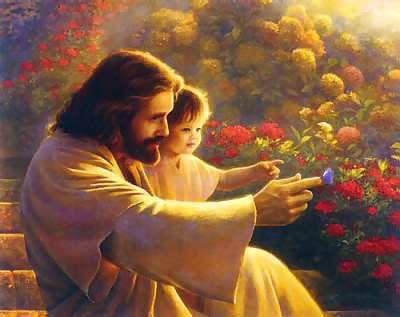 (Commentary by Pastoral Bible). That is why Jesus ask us “Why do you see the speck in your neighbour’s eye, but do not notice the log in your own eye?” and told us to “First take the log out of our own eye, and then you will see clearly to take the speck out of your neighbour’s eye.” (Matthew 7. 3 – 5, NRSV). These messages clearly teach us to see things in broader perspective instead of our own personal narrow perspective in right or wrong, because there is a big chance that our opponent is reacting toward the situation exactly the same way as we are, thus both are just following our “human nature” and either both are wrong or both are right and neither should be judging the others because both see things only from their own egotistical perspective.
Jesus even described God’s love in such extreme by saying “Truly I tell you, people will be forgiven for their sins and whatever blasphemies they utter” (Matthew 3.28, NRSV). And the Commentary by Pastoral bible goes like this: “The God whom Jesus knows is aware of how far human stupidity can go and doesn’t feel offended by so many ridiculous or blasphemous words habitually used in our society”. It is an awareness of His (God’s) creations stupid and ugly nature – again, not a crybaby sweet patience out if nowhere, but a kind of love that is beyond our ability to accept. And if this still can’t give the clue about God’s love, I don’t know what else can.
Now after a long babbling about why Jesus called both human and God at the same time, I will cut this straight. It is because He was able to reach God’s love even when born as a human that He is an ideal “teacher” for us in search for God. His presence is a proof that we Human can earn our salvation and reach the previously impossible God that is within us. Thus the birth of Jesus spread as “Good News” because finally God has shown us that human can reach salvation. That is also why we called Jesus our “Savior” because by His teaching, He show us the way towards salvation. And also, through His birth God has fulfilled what has been written “So God created humankind in his image, in the image of God he created them” (Genesis 1.27, NRSV), so it has always been our purpose in this world as human to become the Image of God and Jesus fulfillment had shown us the way, and proved that it can and must be done.
A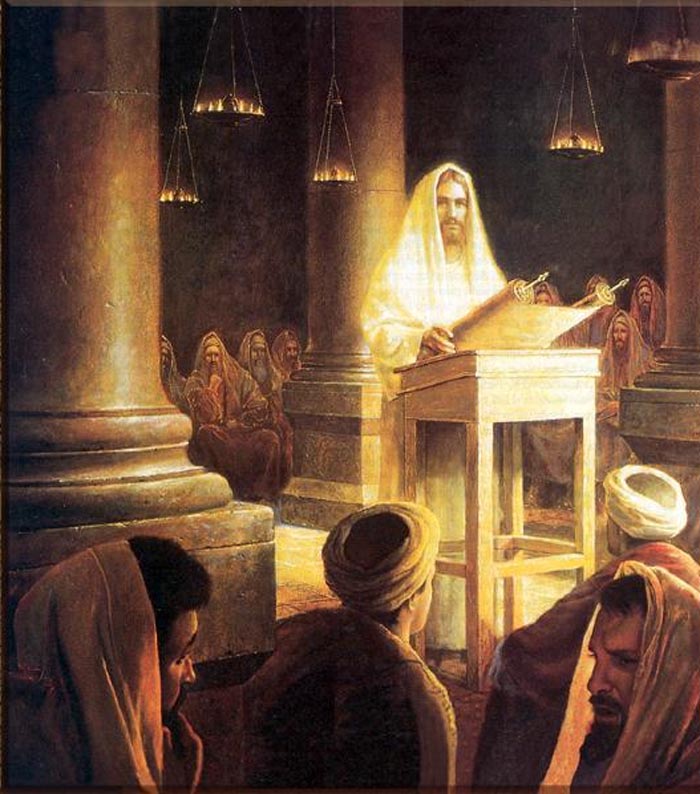 nd why is it that when He was crucified, it is said that He has paid for our sin to God? It was because He had made a stand for the word of God that was taught through Him. During His whole life, He had been the messenger of the word of God which didn’t suit the religious authority at that time. He was consider blasphemous by the Jewish priests who at that time struggled hard to kept the authority at their hand during Jewish oppression by the Roman empire. So the torture and cross are consequences of the way that He had chosen, and He had no choice but to face it. By “drinking from His cup” (Matthew 26.42, NRSV), He had fulfilled God’s movement in spreading the teaching toward salvation. By making a stand for the cross, He had showed that the spreading of the teaching shall not be suppressed and defeated by worldly fear of pain and death. The word of God shall re
 main timeless in its value. He had than finally “kept the salt from losing its taste, and put the light on the lampstand” (Matthew 5.13 – 14, NRSV). The tales of crucifixion and resurrection are very ear and faith catching thus so wildly popular and easily acknowledge by many. By acknowledgement of this story alone, one at least has kept an access toward the teaching – the word of God – even when it is merely believed and not immediately understood. So that is why by being crucified, He is said to have repented for our sin. Because He showed that the truth of the teaching shall defeat pain and death, and He had also kept the teaching alive and He made it widespread, so that we humans may forever have the access to the word of God and the knowledge of salvation that will freed us from our Sin.
 That said, “when we human poop at the wrong place without wiping our own ass, instead of cleaning our mess instantly and wiping our ass for us, Jesus has taught us to poop at the toilet and to wipe our own ass”. Not the most suitable parable – I made it myself, what can you expect –, but hopefully you got the message. Jesus death wasn’t meant to instantly erase our Sin, but instead to keep the teaching alive and made it widespread so that we Human may forever have the access to it and thus may be freed from sin by earning salvation through constant learning and understanding of His teaching.
April 27, 2010
ISO VS Shutter Speed - Night at Kendari
This images were taken in the middle of the night, from the third floor of my aunt's house. All using ISO 100, F/8 to optimize sharpness, and 20-30 second of shutter release.


There are two things that I found that night:
1. Long shutter speed is much much better compare to high ISO when it comes to noise. see it for yourself.
2. when using tripod with long shutter release, turn of the IS (Image stabilization). the IS is kinda wobbly and will cause as if the picture were taken by hand held.
1. Long shutter speed is much much better compare to high ISO when it comes to noise. see it for yourself.
2. when using tripod with long shutter release, turn of the IS (Image stabilization). the IS is kinda wobbly and will cause as if the picture were taken by hand held.
Dusk at Kendari
I'd taken some picture about a week earlier prior to the morning stroll. Those were taken when I accompanied my aunt to local evening fish market. As usual, around the sunset or sunrise, I was looking for the golden sunlight at the golden hour, but it was cloudy and the sky is dark blue everywhere. it is here that I realize that if I don't have a golden sunlight to utilize, I will always have the blue light to exploit. White balance is determined by temperatures, means if I can't find the warm light, it means there is a cool light. So I have to be creative, using everything that is provided to create a good image.


Other things that I discovered when editing my pictures is that even if I like high saturated colors, it is not wise to force it at the in-camera setting, because it will make your images prone to noise. So I find it that I will get a better result if I add some more saturation later from my laptop
April 26, 2010
Kendari's Trivial Things
Traffic:
1. Kendari's drivers and bikers are generally as assholes as Jakarta's, as noisy as Jakarta's, but at the same time are much more moronic than Jakarta's, and thus more annoying. but nevertheless, driving and biking in Kendari is still much enjoyable due to its very low traffic compare to Jakarta's - full hell unleashed - traffic especially around busy hours.
2. You'll find some community service billboard telling you to wear your seat belt, yet in Kendari wearing seat belt drivers is a very rare sight if not none at all. it doesn't matter if there is a police riding a bike right at your side or patrolling sideways. They won't do no shit about it.
3. I drove a pickup car yesterday with only one seat to spare at the front seat, yet I manage to stacked 3 other PTT doctors by my side (means there are four of us) and drove exactly side by side with a police motor bike. The police just stared once and didn't give a shit, literally at all.
4. So I concludes that the only punishable trespasses are:
- Crossing the red light
- Driving against the verboeden (only in main large streets)
- Not wearing helmet (for bikers), and
- Crash directly to a group of police I guess.
Food:
1. Generally there is nothing very delicious or unique in Kendari's culinary.
2. Food are generally expensive, fish are expensive, chickens are even worse. Pork?dream on, you won't find any, not even in restaurants. Well you'll find some if you have your dinner at some local Chinese families.
3. They have this strange love to "cassava" (singkong) and strangely named it "sweet potato" (ubi). For example, they have this menu called "sweet potato soup" (sop ubi) which is actually a chicken noodles with fried "cassava" (singkong), chopped and mixed altogether. Heck, they even got a "sweet potato rib soup" (sop konro ubi) - originally a Makassar's cuisine which use no ubi and should've called soop konro, but they add a cassava in it and hence the name "sweet potato rib soup" (sop konro ubi). Confused?me too.
4. They also have a love for peanut. They add it to their "grilled fish" chilly mixture - which is unusual because back in java, we mix peanut sauce only with satay or dumpling - and even to their "pisang ijo" - which is also unusual because originally pisang ijo is Makassar food, and use no peanut - but the later actually is quite tasty.
Large City Delicacy:
1. Kendari has one KFC. (THANK GOD!!)
2. One Gramedia. ( DOUBLE THANK YOU GOD!!)
3. One Matahari Department Store. (Humm...not bad)
4. One Paparon's Pizza. (Don't care, don't like it)
Internet Access:
1. You can find internet quite easily here. 4k an hour, cheaper if you prepaid the rent for two or three hours.
2. If you had a laptop with wireless modem on it, than internet is as cheap a 5k rupiahs cup of - not so delicious - coffee, or 8k rupiahs glass of juice, depends on your taste, for an unlimited time. a very good value for money compare to 150k rupiahs a month of painstakingly slow and 1 or 2 (I forgot) GB limited Telkomsel flash. But I heard that laptop is a trend here, and if you got one and hang around the cheap coffee shop to get that cheap but satisfyingly fast internet, then you are considered cool. Heck I don't care, just let me finish typing and publishing my post or uploading my pictures in peace.
1. Kendari's drivers and bikers are generally as assholes as Jakarta's, as noisy as Jakarta's, but at the same time are much more moronic than Jakarta's, and thus more annoying. but nevertheless, driving and biking in Kendari is still much enjoyable due to its very low traffic compare to Jakarta's - full hell unleashed - traffic especially around busy hours.
2. You'll find some community service billboard telling you to wear your seat belt, yet in Kendari wearing seat belt drivers is a very rare sight if not none at all. it doesn't matter if there is a police riding a bike right at your side or patrolling sideways. They won't do no shit about it.
3. I drove a pickup car yesterday with only one seat to spare at the front seat, yet I manage to stacked 3 other PTT doctors by my side (means there are four of us) and drove exactly side by side with a police motor bike. The police just stared once and didn't give a shit, literally at all.
4. So I concludes that the only punishable trespasses are:
- Crossing the red light
- Driving against the verboeden (only in main large streets)
- Not wearing helmet (for bikers), and
- Crash directly to a group of police I guess.
Food:
1. Generally there is nothing very delicious or unique in Kendari's culinary.
2. Food are generally expensive, fish are expensive, chickens are even worse. Pork?dream on, you won't find any, not even in restaurants. Well you'll find some if you have your dinner at some local Chinese families.
3. They have this strange love to "cassava" (singkong) and strangely named it "sweet potato" (ubi). For example, they have this menu called "sweet potato soup" (sop ubi) which is actually a chicken noodles with fried "cassava" (singkong), chopped and mixed altogether. Heck, they even got a "sweet potato rib soup" (sop konro ubi) - originally a Makassar's cuisine which use no ubi and should've called soop konro, but they add a cassava in it and hence the name "sweet potato rib soup" (sop konro ubi). Confused?me too.
4. They also have a love for peanut. They add it to their "grilled fish" chilly mixture - which is unusual because back in java, we mix peanut sauce only with satay or dumpling - and even to their "pisang ijo" - which is also unusual because originally pisang ijo is Makassar food, and use no peanut - but the later actually is quite tasty.
Large City Delicacy:
1. Kendari has one KFC. (THANK GOD!!)
2. One Gramedia. ( DOUBLE THANK YOU GOD!!)
3. One Matahari Department Store. (Humm...not bad)
4. One Paparon's Pizza. (Don't care, don't like it)
Internet Access:
1. You can find internet quite easily here. 4k an hour, cheaper if you prepaid the rent for two or three hours.
2. If you had a laptop with wireless modem on it, than internet is as cheap a 5k rupiahs cup of - not so delicious - coffee, or 8k rupiahs glass of juice, depends on your taste, for an unlimited time. a very good value for money compare to 150k rupiahs a month of painstakingly slow and 1 or 2 (I forgot) GB limited Telkomsel flash. But I heard that laptop is a trend here, and if you got one and hang around the cheap coffee shop to get that cheap but satisfyingly fast internet, then you are considered cool. Heck I don't care, just let me finish typing and publishing my post or uploading my pictures in peace.
Subscribe to:
Posts (Atom)